



Municipalities can no longer treat their water systems as cash cows

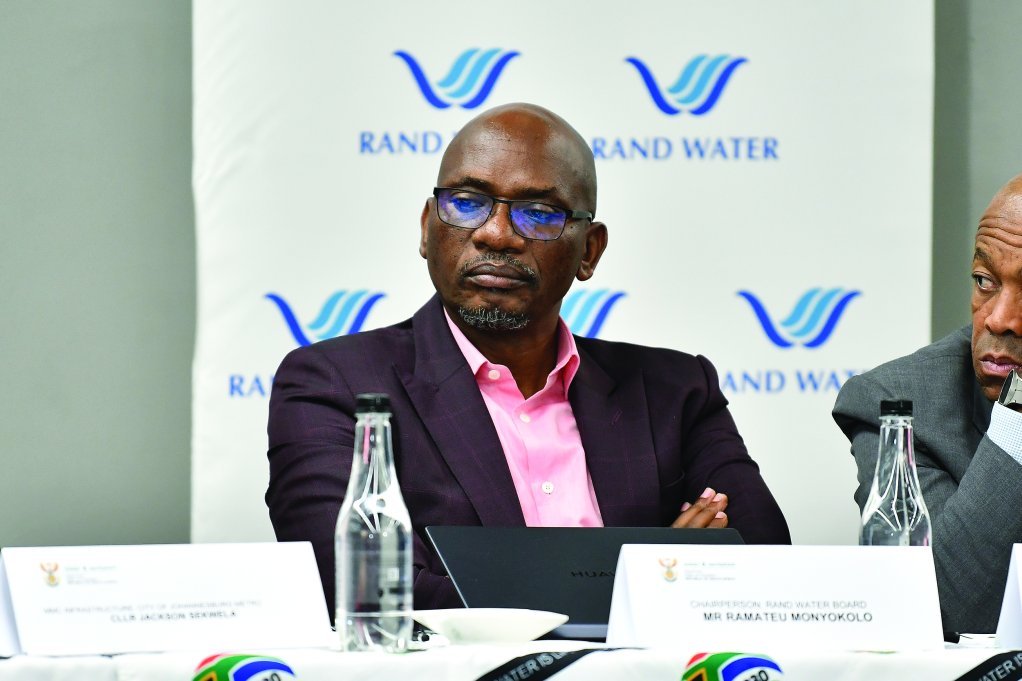


In South Africa, the water utilities and systems are treated as stepchildren, by the various levels of government, affirmed Association of Water and Sanitation Institutions of South Africa (Awsisa) chairperson and Rand Water chairperson Ramateu Monyokolo, on Wednesday. He was delivering a keynote address on the second day of the Enlit Africa 2026 Conference, being held at the Cape Town International Convention Centre.
Municipalities used water and electricity as cash cows, he highlighted, adding that they did not reinvest in their water (and electricity) systems. They paid everyone on time, except for Eskom and the water boards. Municipalities currently owed water boards a total of R27-billion. One municipality alone owed R9-billion.
Unsurprisingly, then, some 50% of the water in the country's water board systems was lost underground.
He noted that President Cyril Ramaphosa had declared an emergency in the water sector, just like he had previously done with the electricity sector. But the kind of interventions seen in the electricity sector were not yet visible in the water sector.
Monyokolo argued that the electricity sector should be involved in the response to the water crisis, because the sector had great lessons to teach the water sector. Also, water treatment plants needed assured power supplies. He explained that, if there was a five-minute power failure, it would take two hours to restore operations at such a plant. During that time, untreated sewage would pour straight into the country's rivers. "We can't just talk water alone!"
There was another reason for involving the electricity sector. The water pressure in the pipelines coming downhill from the Lesotho Highlands Water Scheme was so high that it could be used to generate electricity. This was being done in Lesotho and a number of South African water boards were considering doing the same thing.
He further noted that, in Finland and Sweden, waste produced by water treatment plants was being used to generate methane. That methane was then used to fuel city buses.
But in South Africa, everything was in silos, he lamented. Water and electricity fell under different departments and under different Ministers. Ministers and departments defended their turfs. Further, the legal framework hampered coordination and collaboration between the two sectors. This should change.
There was a need for a new approach to water, in South Africa. The Department of Water and Sanitation had budgeted R55-billion to address the problems, but Awsisa wanted to create an infrastructure fund outside of government. Awsisa also wanted to be made the implementation agency for the ending of the water crisis. To this end, the association wanted to work with the built environment and electricity sectors.
"We don't have much choice," he asserted. "Municipalities cannot continue as they are, water boards cannot continue as they are."
Rand Water had established a public-public partnership (PPP) with Emfuleni municipality. That's what was wanted: PPPs. And special procurement provisions, as during the time of Covid, had to be brought in. The regulations had to change.
Article Enquiry
Email Article
Save Article
Feedback
To advertise email advertising@creamermedia.co.za or click here
Research Reports

Projects


Latest Multimedia

Latest News
Showroom
Leading condition monitoring specialists, WearCheck, help boost machinery lifespan and reduce catastrophic component failure through the scientific...
VISIT SHOWROOM



Press Office
Announcements
What's On
Subscribe to improve your user experience...
Option 1 (equivalent of R125 a month):
Receive a weekly copy of Creamer Media's Engineering News & Mining Weekly magazine
(print copy for those in South Africa and e-magazine for those outside of South Africa)
Receive daily email newsletters
Access to full search results
Access archive of magazine back copies
Access to Projects in Progress
Access to ONE Research Report of your choice in PDF format
Option 2 (equivalent of R375 a month):
All benefits from Option 1
PLUS
Access to Creamer Media's Research Channel Africa for ALL Research Reports, in PDF format, on various industrial and mining sectors
including Electricity; Water; Energy Transition; Hydrogen; Roads, Rail and Ports; Coal; Gold; Platinum; Battery Metals; etc.
Already a subscriber?
Forgotten your password?
Receive weekly copy of Creamer Media's Engineering News & Mining Weekly magazine (print copy for those in South Africa and e-magazine for those outside of South Africa)
➕
Recieve daily email newsletters
➕
Access to full search results
➕
Access archive of magazine back copies
➕
Access to Projects in Progress
➕
Access to ONE Research Report of your choice in PDF format
RESEARCH CHANNEL AFRICA
R4500 (equivalent of R375 a month)
SUBSCRIBEAll benefits from Option 1
➕
Access to Creamer Media's Research Channel Africa for ALL Research Reports on various industrial and mining sectors, in PDF format, including on:
Electricity
➕
Water
➕
Energy Transition
➕
Hydrogen
➕
Roads, Rail and Ports
➕
Coal
➕
Gold
➕
Platinum
➕
Battery Metals
➕
etc.
Receive all benefits from Option 1 or Option 2 delivered to numerous people at your company
➕
Multiple User names and Passwords for simultaneous log-ins
➕
Intranet integration access to all in your organisation
